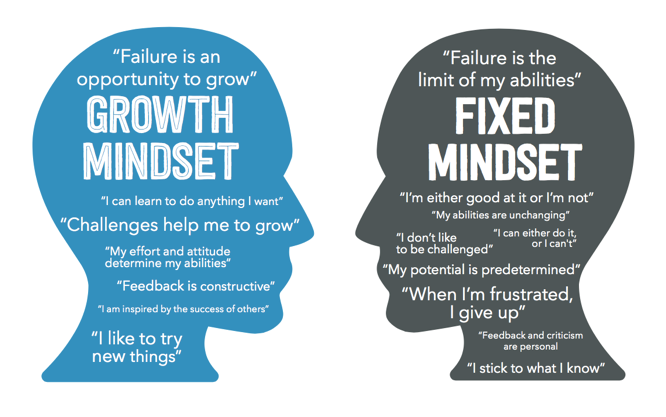
At Crayke Church of England Primary School, we know that pupils who have a positive attitude towards their learning will make good progress and be successful. Consequently, instilling all our pupils with ‘growth mindsets’ has become a key priority for the school.
We want all our pupils to relish challenges, embrace their mistakes as part of the learning process, value the importance of effort, respond carefully to feedback and take inspiration from others. This will help them to achieve, not only with us, but also in their future lives as adults.
We know that in order to fulfil the potential of our pupils and encourage them to become confident and resilient learners we, as a team of parents and staff, need to be modelling the mindset of a learner who is not afraid of making mistakes but who thrives upon them, knowing that this is all part of the learning process. The way in which we encourage children to learn and explore is vital to their success, not only at school but at home as well.
At Crayke, we consistently endeavour to challenge and develop the attitudes of all pupils and staff towards learning by considering what makes a successful learner. We have dedicated sessions in class to address what kind of learners we want to be and how we can positively approach challenges inside and outside the classroom. The school is buzzing with talk of perseverance, challenge, risks and celebrating mistakes.
Central to this attitude and approach to learning, are the theories and proven evidence of Growth Mindset. This is a term coined by psychologist Carol Dweck and her research has identified the characteristics of learners with a fixed and a growth mindset.
Key aspects of a growth mindset at Crayke Primary School:
• We celebrate making mistakes – we can learn from them;
• We never give up – perseverance is the key if we are to succeed;
• We learn from each other;
• We don’t compare ourselves with others;
• We challenge ourselves and take calculated risks;
• We remember that our brains are making new connections and growing all the time.
| Cookie | Duration | Description |
|---|---|---|
| _GRECAPTCHA | 6 months | Google Recaptcha service sets this cookie to identify bots to protect the website against malicious spam attacks. |
| cookielawinfo-checkbox-advertisement | 1 year | Set by the GDPR Cookie Consent plugin, this cookie records the user consent for the cookies in the "Advertisement" category. |
| cookielawinfo-checkbox-analytics | 1 year | Set by the GDPR Cookie Consent plugin, this cookie records the user consent for the cookies in the "Analytics" category. |
| cookielawinfo-checkbox-functional | 1 year | The GDPR Cookie Consent plugin sets the cookie to record the user consent for the cookies in the category "Functional". |
| cookielawinfo-checkbox-necessary | 1 year | Set by the GDPR Cookie Consent plugin, this cookie records the user consent for the cookies in the "Necessary" category. |
| cookielawinfo-checkbox-others | 1 year | Set by the GDPR Cookie Consent plugin, this cookie stores user consent for cookies in the category "Others". |
| cookielawinfo-checkbox-performance | 1 year | Set by the GDPR Cookie Consent plugin, this cookie stores the user consent for cookies in the category "Performance". |
| CookieLawInfoConsent | 1 year | CookieYes sets this cookie to record the default button state of the corresponding category and the status of CCPA. It works only in coordination with the primary cookie. |
| rc::a | never | This cookie is set by the Google recaptcha service to identify bots to protect the website against malicious spam attacks. |
| rc::b | session | This cookie is set by the Google recaptcha service to identify bots to protect the website against malicious spam attacks. |
| rc::c | session | This cookie is set by the Google recaptcha service to identify bots to protect the website against malicious spam attacks. |
| rc::f | never | This cookie is set by the Google recaptcha service to identify bots to protect the website against malicious spam attacks. |
| wpEmojiSettingsSupports | session | WordPress sets this cookie when a user interacts with emojis on a WordPress site. It helps determine if the user's browser can display emojis properly. |
| Cookie | Duration | Description |
|---|---|---|
| NID | 6 months | Google sets the cookie for advertising purposes; to limit the number of times the user sees an ad, to unwanted mute ads, and to measure the effectiveness of ads. |